


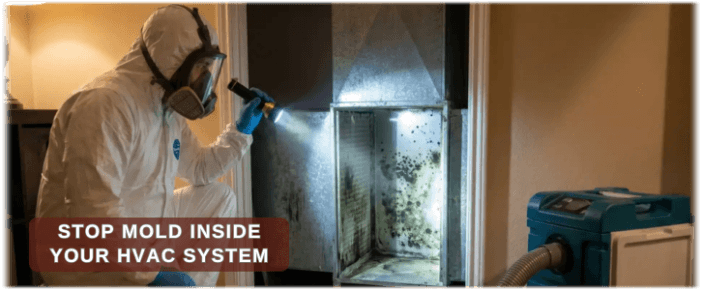
Reliable HVAC Mold Removal in Chicago, IL can help homeowners address unwanted growth within heating and cooling systems. Chicago’s humid summers and long winters create challenging indoor moisture conditions. Condensation, leaks, and poor moisture control can encourage mold growth around HVAC components. Therefore, addressing both contamination and its source matters. Call (872) 213-7245 today to discuss your system and arrange service.
HVAC Mold Removal in Chicago, IL for Residential Systems
Your HVAC system moves air throughout the home every day. Consequently, moisture problems within that system deserve timely attention.
Mold can develop where moisture meets dust and other organic material. Cooling coils, drain areas, and nearby surfaces may become vulnerable under certain conditions.
Our approach to HVAC mold remediation starts with evaluating accessible areas. Next, we identify visible growth and conditions that may contribute to it.
However, we never assume every stain or dark mark indicates mold. Instead, we focus on observable conditions and explain our findings clearly.
What Can Cause Mold Around HVAC Components?
Excess moisture creates the main concern. For example, condensation can increase during Chicago’s humid summer weather.
Clogged drainage areas, leaks, or previous water intrusion can also introduce moisture. Additionally, high indoor humidity may allow damp conditions to persist longer.
Therefore, effective mold treatment for HVAC systems should consider the moisture source. Removing visible growth without addressing moisture may allow the problem to return.
Warning Signs That Deserve a Closer Look
A musty odor when your system runs can indicate a moisture-related problem. Likewise, visible growth around accessible components deserves further evaluation.
Recurring condensation can provide another warning sign. However, odors and discoloration can have several causes, so proper evaluation remains important.
A ductwork inspection may also reveal moisture or debris within accessible ventilation areas. If contamination affects those sections, separate air duct mold removal may become appropriate.
Chicago HVAC Mold Removal for Changing Seasons
Chicago HVAC Mold Removal requires attention to the city’s dramatic seasonal conditions. Furnaces run heavily during freezing winters, while air conditioners manage summer heat and humidity.
Older homes around Lincoln Square, Beverly, and Logan Square can have complex mechanical layouts. Meanwhile, Lakeview condos and downtown properties may use compact HVAC equipment.
Because these systems differ, we tailor our approach to each home’s layout and visible conditions. Furthermore, we consider previous leaks or moisture issues when evaluating the system.
Supporting a Cleaner Home Air System
Mold-related work may represent only one part of maintaining your home’s ventilation equipment. Other maintenance tasks address different concerns.
For example, HVAC cleaning can remove ordinary debris from accessible heating and cooling components. Meanwhile, air duct cleaning focuses on accumulated material inside ventilation lines.
AC coil cleaning may help remove buildup from an important cooling component. Separately, dryer vent cleaning removes lint from the dryer’s exhaust pathway.
We keep these services distinct. Therefore, homeowners can choose work based on actual system conditions instead of unnecessary packages.
Practical Solutions and Straightforward Communication
Finding suspected mold around HVAC equipment can feel concerning. For that reason, we make the process easy to understand.
We explain visible conditions, discuss practical next steps, and answer questions without pressure. Most importantly, we focus on what your particular system needs.
Prompt attention also matters when moisture continues. Addressing the source early can help reduce the chance of recurring growth.
Frequently Asked Questions
Why does mold grow inside HVAC systems?
Mold can grow when condensation, leaks, or high humidity create persistent moisture around dusty HVAC components and nearby surfaces.
Can HVAC mold come back after removal?
Yes. Mold can return when moisture remains, so homeowners should correct leaks, drainage problems, condensation, and excessive indoor humidity.
Who should I call for mold concerns in my Chicago HVAC system?
Call (872) 213-7245 to discuss your concerns and schedule professional HVAC Mold Removal in Chicago, IL.
Do not let persistent moisture give suspected mold more time to spread around your HVAC equipment. Call (872) 213-7245 today for responsive scheduling, targeted solutions, and dependable HVAC Mold Removal in Chicago, IL.